
Grafton Prison Release Outcomes
Grafton Correctional Institution is an ODRC state prison at the Grafton complex. Its release authority comes from the state sentence, the sentencing court, and, where applicable, the Ohio Parole Board. It does not use the Lorain County Sheriff’s booking-release process. Someone housed at Grafton may have been committed by any Ohio county, so search results must be matched by offender number and case details rather than location alone.
A departure can be transfer to another ODRC institution, judicial release, parole, post-release control, transitional control, or sentence discharge. Transfer is not release. Judicial release comes from the sentencing court and may carry community-control terms. Parole and post-release control place the person in the community under APA authority. Discharge is the end of the relevant state correctional term shown by the responsible record.
The committing court and ODRC record form a continuous state-prison trail. Begin with the docket and offender number tied to admission. The ODRC detail may then show admission date, effective sentence date, jail-time credit, aggregate or net sentence, Grafton as the institution, and the current status. A later institution name shows where state custody moved. A later supervision start or release detail shows a different kind of event. County of commitment is especially useful because Grafton’s physical location in Lorain County does not mean Lorain County imposed the sentence. When several people share a name, match the offender number, birth date, offense, docket, and committing county before reading dates. ODRC also warns that its sentence list may be incomplete, so an omitted count is not proof that a court term vanished. For a conflict, compare the sentencing entry with Central Records rather than forcing a county-jail record to answer a statewide prison question.
| Displayed event | What it establishes |
|---|---|
| New institution | ODRC custody continues elsewhere |
| Released status | A release record within public coverage |
| APA Supervision | Community release under state supervision |
| Judicial release | Court-authorized release from prison |
| Past expected date | A projection or eligibility point, not proof |
Note: Grafton’s Lorain County address does not mean Lorain County was the committing or sentencing county.
Confirm Grafton Prison Release
Open the ODRC Offender Search. A broad last-name search is usually the safest start. Add a first name, offender number, county of commitment, residential county, ZIP, or status only to narrow the correct person. Male offender numbers carry an A or R prefix and six digits. Female numbers use W and six digits, with a leading zero added to a five-digit number.
- Search by surname or exact ODRC number.
- Match the number, photo, birth date, offense, and committing county.
- Read current Status and Institution first.
- Review Parole or Release Detail, POA/PRD, and supervision dates.
- Check the sentencing docket or Central Records when fields disagree.
ODRC status choices include Incarcerated, Released, APA Supervision, and Violators at Large. Incarcerated means the person remains in prison even if temporarily out for court. APA Supervision can include parole, post-release control, and certain violation statuses. A listed address is only the last recorded address and may lag. It should not be treated as current whereabouts.
Grafton Release Record Fields
The ODRC result may include the offender number, photo, birth date, race, gender, admission date, institution, and current status. The detail can add offense, commitment county, docket, judge, sentence dates, jail-time credit, aggregate or net sentence, expected release or parole eligibility, a future board review month, the latest board result, POA/PRD, release detail, and APA supervision information.
The combined Expected Release Date/Parole Eligibility Date label has a precise limit. ODRC defines it as a projected release date or a date pending parole consideration. Old-law and life cases may still require board review. POA means parole on or after. PRD means projected release date. Both can change through board action, sentence correction, earned-credit decisions, violations, or another case.
| Field | Question answered |
|---|---|
| Status | Is the person incarcerated, released, or supervised? |
| Institution | Where does ODRC currently assign the person? |
| Release Detail | What release or parole event was recorded? |
| Supervision Start | When did APA community supervision begin? |
| APA Office | Which office is assigned to supervision? |
“Parole or Release Detail” is blank while incarcerated and populated after release or parole. Use that field with Status. ODRC warns its sentence list may be incomplete, so the court judgment and state record may both be needed for a conflict.
Grafton Prison Records Contact
The facility address and system identity are confirmed by ODRC. The research does not give a verified direct prison telephone number or current public hours. Use the official facility page for updated contact and access instructions. For a public offender-record conflict, ODRC Central Records is the documented records route.
Grafton Correctional Institution2500 South Avon-Belden Road
Grafton, OH 44044
Operator: Ohio Department of Rehabilitation and Correction ODRC Central Records
Attn: Central Records
P.O. Box 430
Columbus, OH 43216
614-752-1161
Give the person’s name, offender number, and the exact date or status at issue. Ask for the existing record or correction review. If the dispute comes from the sentence itself, contact the clerk for the committing court. The Lorain County Sheriff cannot certify a Grafton prison release simply because the prison is located in Lorain County.
The official Grafton Correctional Institution page is a successful matched source in the manifest.
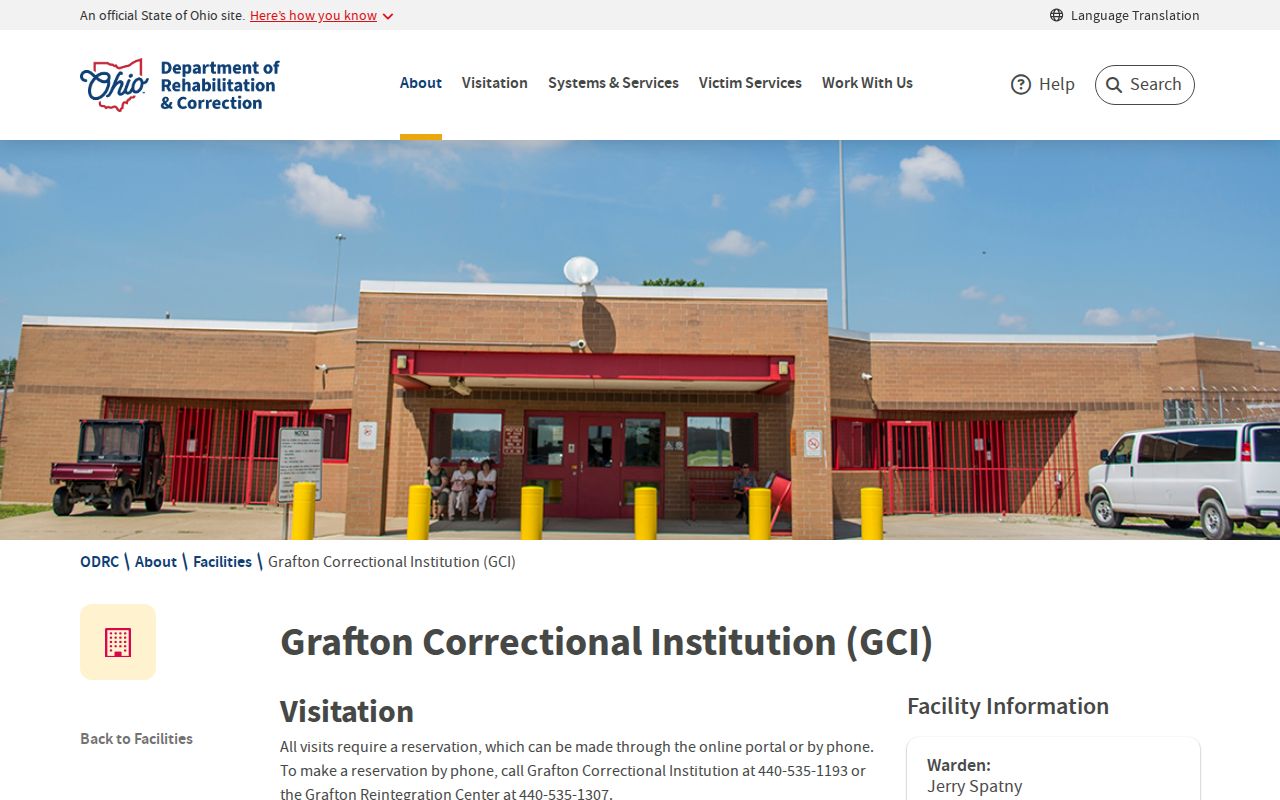
This ODRC source places Grafton within the correct statewide record system and separates it from county jail data.
Grafton Post-Release Control
Post-release control is a statutory period of APA supervision after prison for covered Ohio sentences. It differs from county probation, which is imposed and supervised through a court. A Grafton release record may name the APA office, supervision start, period, conditions, and a later end or early termination. Those fields show that a person can be out of prison yet still subject to state correctional authority.
The matched manifest also provides the Ohio post-release-control statute.
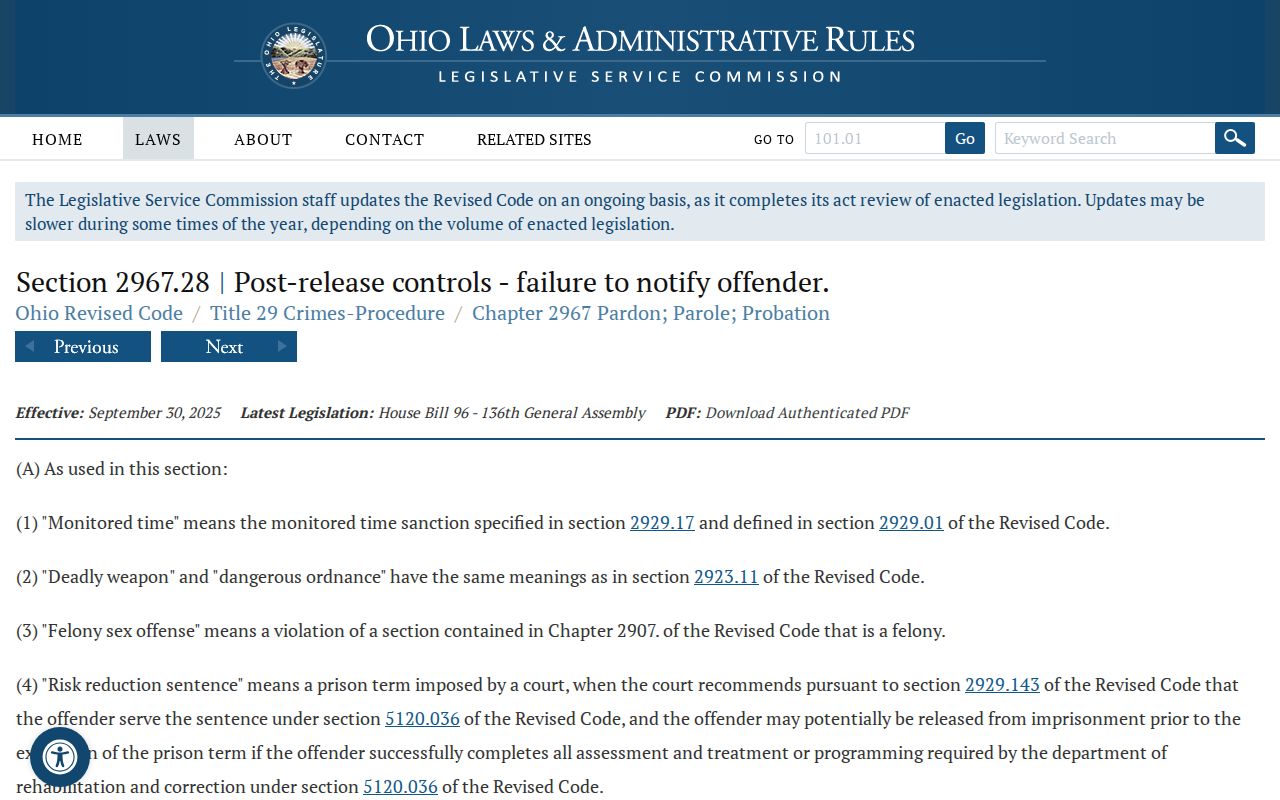
The statute supplies the statewide framework, while the individual ODRC record and sentencing entry show whether it applies to one person.
A supervision violation may alter status. ODRC provides a Violators at Large filter, but a last recorded address is not present location. Never infer where a person is from that field. The current status, APA office, and official violation record are the relevant sources.
Note: APA Supervision confirms release from prison but does not establish final discharge from state correctional authority.
Grafton Release Date Limits
Sentence computation can involve the offense date, concurrent or consecutive terms, court-certified jail-time credit, mandatory time, earned credits, and parole eligibility. Qualifying modern indefinite sentences may have a presumptive release point, while older indefinite or life sentences can require Parole Board action. The ODRC detail condenses these rules into fields, but it does not make every projected date final.
Compare a date against the current status on the day of the check. Court appeals, corrected entries, additional cases, loss or withdrawal of credit, board action, or a violation can move the display. A future board review month means consideration is scheduled, not that release has been approved.
Once community release is confirmed, use APA details for supervision and the committing court for judicial-release conditions. Once final discharge is confirmed, preserve the ODRC number and source date with the record. That makes later questions easier to route to the office that created the field.
Ohio VINE may provide a custody-change notice for a participating state record. Treat that alert as a prompt to check, not as the complete discharge certificate. A transfer, delayed feed, or changed spelling can alter what appears. ODRC Offender Search remains the main public state-prison source, while Central Records handles official conflicts. If another custodian received the person, use that custodian’s system to follow the next part of the custody trail.
Keep county and state records in their proper roles. The Lorain Tyler inquiry can document a prior county-jail booking before prison, and the Common Pleas docket can show the conveyance order. Neither proves the later Grafton release. The state record takes over after ODRC admission. This sequence is useful when the same name has several county bookings, because the ODRC number ties the state sentence, institution, and release fields to one person.
A Parole Board hearing month also needs context. It shows a scheduled review period, not an approved gate date. Compare the latest hearing type and result with current status. When the public result uses an unexplained code, ask ODRC rather than inventing its meaning.