
Lorain/Medina CBCF Exit Paths
Lorain/Medina Community Based Correctional Facility is a secure residential sanction for felony cases from the Lorain and Medina Common Pleas courts. Placement is community-based corrections, but it still involves residential program control. Arrival at CBCF should not be described as release to the community. The Lorain County jail’s annual report makes the distinction visible by listing “To CBCF” as one of its departure codes.
An exit from CBCF can reflect successful completion, a court-approved modification, or an unsuccessful termination followed by another sanction. Those outcomes are not interchangeable. A completed program may lead to continued community control under probation terms. A termination may return the matter to the sentencing judge and can lead to a different placement. The controlling order and later docket entries provide the durable legal account.
| CBCF event | Best confirmation |
|---|---|
| Transfer from county jail | Jail release code plus sentencing docket |
| Program completion | CBCF or probation record and court entry |
| Court-approved change | Common Pleas journal entry |
| Unsuccessful termination | New court order and receiving-custody record |
Note: A jail code reading To CBCF marks a transfer into residential program control, not release to the community.
Confirm a Lorain CBCF Discharge
Start with the Common Pleas case that ordered the placement. The Lorain County Clerk of Courts route leads to the official docket for Lorain County cases. Search using the person’s name or case number, then read the sentencing entry, CBCF placement entry, review hearings, and any later modification or completion order. A docket date alone is not an exit time, so read the filed entry rather than guessing from the event label.
- Identify whether Lorain or Medina Common Pleas imposed the CBCF sanction.
- Locate the correct case and verify the person with the docket number.
- Read the placement order and each later CBCF review or disposition.
- Confirm public completion or discharge information with probation or CBCF.
- Check ODRC only when the case also produced an ODRC record.
Lorain County Adult Probation is the local court-supervision path. It is separate from the Ohio Adult Parole Authority, which supervises state parole and post-release control. A person can complete CBCF and remain on Common Pleas community control without ever becoming an APA client. Searching only ODRC can therefore produce a false negative.
Lorain CBCF Court Evidence
The court docket should be read as a sequence. First locate the order that imposed the residential sanction. Then review entries for transport, admission, progress, termination, modification, revocation, or completion. A later probation entry may show that community control continues after the residential phase. If the court imposes prison after a violation, the ODRC offender record becomes the next custody source.
The jail and CBCF records can overlap at one transition without becoming the same record. The Sheriff’s 2023 report counted 838 departures “To CBCF.” That label confirms the person left Lorain County Jail for a residential sanction, not that the person completed CBCF or entered the free community. Use the booking number and release entry to close the county-jail leg. Next, use the Common Pleas case number to follow the placement, review, and final court action. Adult Probation supplies the local supervision path when community control continues. ODRC becomes relevant only if a later order sends the person into state prison or another qualifying state record exists. An ODRC Released result cannot, by itself, certify the dates of a separate CBCF stay. Likewise, an empty county-jail housing field says nothing about current CBCF residence. Each system answers one part of the sequence, so a complete discharge check preserves both the date and the office that created it.
Computerized Lorain Common Pleas records are available through the clerk, subject to sealing, court orders, and other limits. If an entry is unclear, request the journal entry or certified copy from the clerk. A certified court order is stronger than an inferred date from another database. Errors in the disposition belong with the issuing clerk or court, while errors in an ODRC status belong with ODRC Central Records.
The matching successful manifest image comes from the official Lorain County Clerk of Courts page.
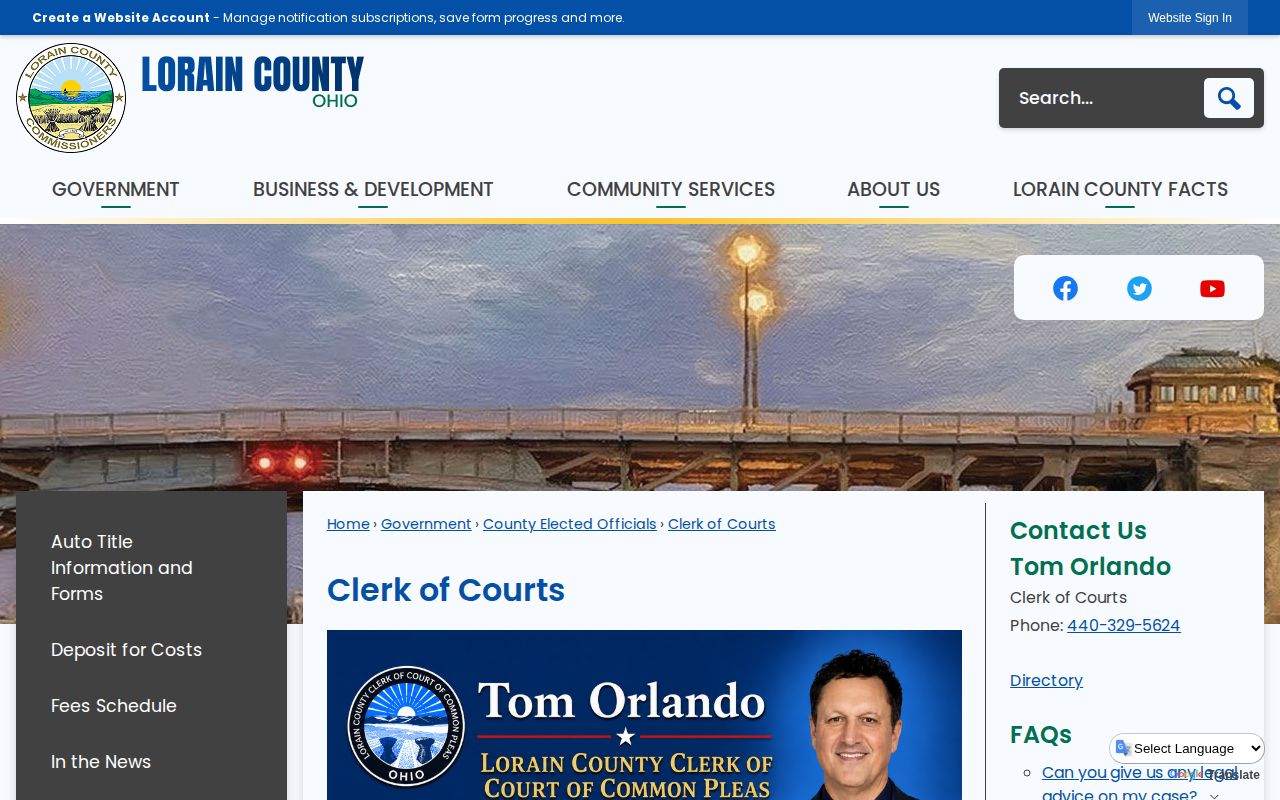
The clerk route anchors a CBCF discharge check in the case that authorized the placement and any later change.
Lorain/Medina CBCF Contacts
The residential facility is on Murray Ridge Road in Elyria. County material describes it as operating around the clock, but that does not mean every record or visitor function is available at all hours. Call for current public access instructions. The research does not provide a verified CBCF public phone number or public-record counter schedule, so no unsupported number is supplied here.
Lorain/Medina Community Based Correctional Facility9892 Murray Ridge Road
Elyria, OH 44035
Secure residential felony program
Public access instructions: confirm before visiting
For a Lorain County case, Adult Probation is at 308 Second Street, Elyria, OH 44035, with telephone numbers 440-326-4700 and 440-326-4701. The probation department can route public procedural questions about a Common Pleas supervision record. It cannot be replaced by the Sheriff’s jail Records desk because the two offices maintain different systems.
Questions about the court entry go to the clerk or court. Questions about CBCF program records go to the program or probation office, subject to public-record limits. If the record shows transfer into an Ohio prison, use ODRC Offender Search and Central Records. Keeping the request with the office that created the field reduces contradictory answers.
Lorain CBCF Residential Status
County material described capacity for 130 residents and continuous operation. Those facts define the CBCF as a residential correctional setting, not an ordinary probation appointment site. It serves felony offenders sent by judges from Lorain and Medina counties. The program’s physical location near the county jail does not merge the two facilities or their record systems.
The Downtown Elyria Loop publicly lists the Sheriff, CBCF, Adult Probation, Justice Center, and the Transportation and Community Center among served points. That route can help with navigation among record and supervision offices. It is not a promise that transit will align with a discharge, court appearance, or check-in time. Verify the current schedule for the day of travel.
- Community control
- A court sentence served under conditions in the community, which may include a residential CBCF phase.
- Discharge
- The end or change of a defined placement or supervision status, shown by the responsible record.
- Termination
- An end to program participation that may be successful or unsuccessful and may lead to court action.
After Lorain CBCF Discharge
A person leaving the CBCF may still have reporting duties. Read the court entry for community-control terms, the assigned probation office, and the next review date. Probation is court supervision. It differs from parole and post-release control, which arise through the state prison and APA system. The label attached to the record determines which agency should confirm status.
If a new sanction sends the person to Lorain Correctional Institution or another state prison, the ODRC record should show an institution and incarcerated status after processing. If the person returns to Lorain County Jail, a new or reopened Tyler booking can appear. Neither movement is a community discharge. A person who completes the residential phase may still remain under county probation until the judge orders final termination.
When public sources conflict, build a dated sequence from the journal entries and facility records. Ask the record owner for correction or annotation when a field is wrong. Do not assume that one office can change another office’s data.
A records request should be narrow enough to route well. Name the case, identify the CBCF placement period, and ask for the existing completion, discharge, termination, or transfer record that is public. Do not ask the Sheriff to create a CBCF history from a jail departure code. The “To CBCF” entry proves the jail leg ended, while Common Pleas and program records explain what happened after arrival. If the person was later sent to prison, link that court sequence to the ODRC offender number and current institution.
For an error, send the certified court entry to the office that owns the conflicting field. The clerk can address its docket, probation can address its supervision record, and ODRC can address state status. No one result substitutes for all three.
Note: CBCF completion can leave county community-control duties active until the sentencing judge orders final termination.